
< HOME
ROOT N RISE
October 2024 | Concept Design | University Project
Brief: Looking at a Post Growth world.
Role: Graphic Designer
Partners: Hana Darkes, Priya Ellis, Fay Anthony
Tools: Adobe Illustrator, InDesign, Blender
Root and Rise envisions a future beyond constant economic pressure and environmental harm. Focusing on sustainability, resilience, and community well-being, it challenges conventional thinking to inspire new approaches to progress, resource management, and social equity.
This project, part of the Visual Systems unit, explores Post-Growth Futures, imagining how society could prioritize sustainability, well-being, and environmental fairness.


KEY FINDINGS
The Post-Growth Toolkit guided our exploration of sustainable alternatives, initially focusing on shipping containers and how they could minimize energy use in shipping, construction, and transportation. A site visit to Slades Farm inspired us to rethink how nature could coexist with technology in education, society, and daily life.
We expanded research beyond containers to food, clothing, and farming. My focus on food highlighted challenges in UK production, imports, and food insecurity, raising questions about sustainability, health, and access to nutritious options.
Investigating container housing revealed structural and cost limitations, prompting the team to explore more innovative, unconventional solutions. Ideation workshops helped push our ideas beyond obvious applications.
Families were our focus group due to their diversity and strong community ties. Research revealed rising mental health challenges, loneliness, and food insecurity—14.4 million families cannot afford a healthy diet, despite government guidance. These insights shaped our project to address real social and environmental needs.
Research shows us that there are at least 309,000 homeless people in England, a 14% increase from 2022. Our idea stems from the 17 Global Sustainable Development Goals, specifically Goal 1: No Poverty, as a framework to address homelessness in the UK.
We found that homelessness is more than a housing issue; it’s deeply tied to poverty, unaffordable housing, and social isolation. Our focus is not just on providing shelter but also on addressing the underlying social challenges.
This idea proposes converting shipping containers into homes, offering a safe environment and a sense of community for those in need.
ROUTE ONE

In 2022, clothing, shoes, and accessories imports into the UK saw a significant rise, highlighting the issue of overconsumption. Fast fashion and ever-changing trends contribute to excessive waste, and our project aims to break this cycle by promoting sustainable consumption.
We propose creating physical hubs or a mobile app where people can swap, exchange, or purchase second-hand clothing, fostering a circular approach to fashion. Additionally, we aim to educate people on repairing and altering garments, extending their lifespan and reducing waste.
Another key aspect is recycling fabrics for other uses and implementing a sustainable waste management system to ensure materials are reused or repurposed responsibly.
ROUTE TWO

The UK imports 46% of its food, totaling £48 billion in 2020 (GOV.UK). As food is one of the most commonly shipped items, our idea aligns with the UN's Sustainable Development Goal 2: Zero Hunger, aiming for a fully food-sufficient UK and the elimination of food insecurity.
With many struggling to access nutritious food (Food Foundation), our initiative proposes phasing out luxury foods and using biodomes to grow fresh, local, organic produce. This approach would make healthy food more accessible and affordable while supporting a sustainable food system.
ROUTE THREE

ROUTE FOUR
In 2022, the global sports equipment market was valued at approximately USD 220.57 billion and is expected to reach USD 337.73 billion by 2030 (Zion Market Research).
This idea combines community, fitness, and renewable energy by integrating eco-friendly outdoor gyms into local spaces.
These gyms would feature vertical gardens and sustainable designs while generating energy through physical activity. Users could earn rewards - such as free activities, day trips, or tree planting events - based on the energy they produce.
By promoting fitness and sustainability, this initiative aims to revitalize communities, encourage healthier lifestyles, and foster collective responsibility for the environment.


WHAT DOES OUR IMAGINARY LOOK LIKE?
Society thrives on collaboration and sustainability. Each week, citizens dedicate two days to community work, such as sustainable farming, skill-sharing, or mentoring, while the remaining three days focus on individual work to maintain essential services.
Renewable energy and environmental regeneration are at the core of this future. Advanced waste management restores ecosystems, reduces carbon footprints, and protects the planet. “Root and Rise” stores across the country provide organic, locally sourced ingredients while serving as community hubs, strengthening the connection between farmers and consumers. Communal spaces promote health, social interaction, and active living. Volunteer-run cafés serve meals made from local ingredients, reinforcing food as a symbol of care and connection.
In this future, everyone contributes to well-being, working together to build a sustainable, healthy world for all.
TAKING A LOOK AT BRANDING?
To explore different creative directions, we divided the team into two groups—one focusing on illustration, the other on typography—allowing us to develop a broad range of branding options.
During a workshop, we worked on defining the brand’s colour scheme and visual identity, creating a vibrant mood board inspired by magazines and design sources to ensure a diverse and flexible concept.
Each team member integrated elements from the mood board into their designs. Some used bright, bold colours, while others opted for more muted tones. Since our target audience is families, we aimed to strike a balance—incorporating playful elements like fruit and flowers while maintaining a mature, refined aesthetic that resonates with both younger and older generations.


OUR FINAL LOGO
The final logo combines elements from both my work and Fay’s, although feedback suggested it needed refinement. Despite this, I’m pleased with the outcome.
Our concept moved away from minimalism, embracing a maximalist, cubist-inspired style to align with our branding strategy. While it may not have fully captured our vision, I still stand by the design. However, simplifying floral elements or creating a monochrome version could improve its versatility, which is something I’ll consider in future logo designs


OUR BRAND EXPERIENCE
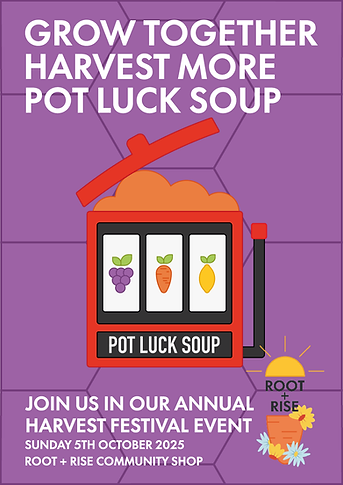
The concept centers on a “potluck soup” event, where community members gather around harvest time to share a meal made from surplus ingredients, reducing food waste and fostering connection.
To immerse ourselves in the experience, we hosted our own Potluck Soup event, pairing homemade soup with fresh bread. Sharing the meal with friends reinforced the importance of community-driven initiatives and deepened my connection to our brand’s mission. This experience highlighted how meaningful events like these can positively impact both branding and the community.

